More from The Shared World
Find more related content, including recent and older writings


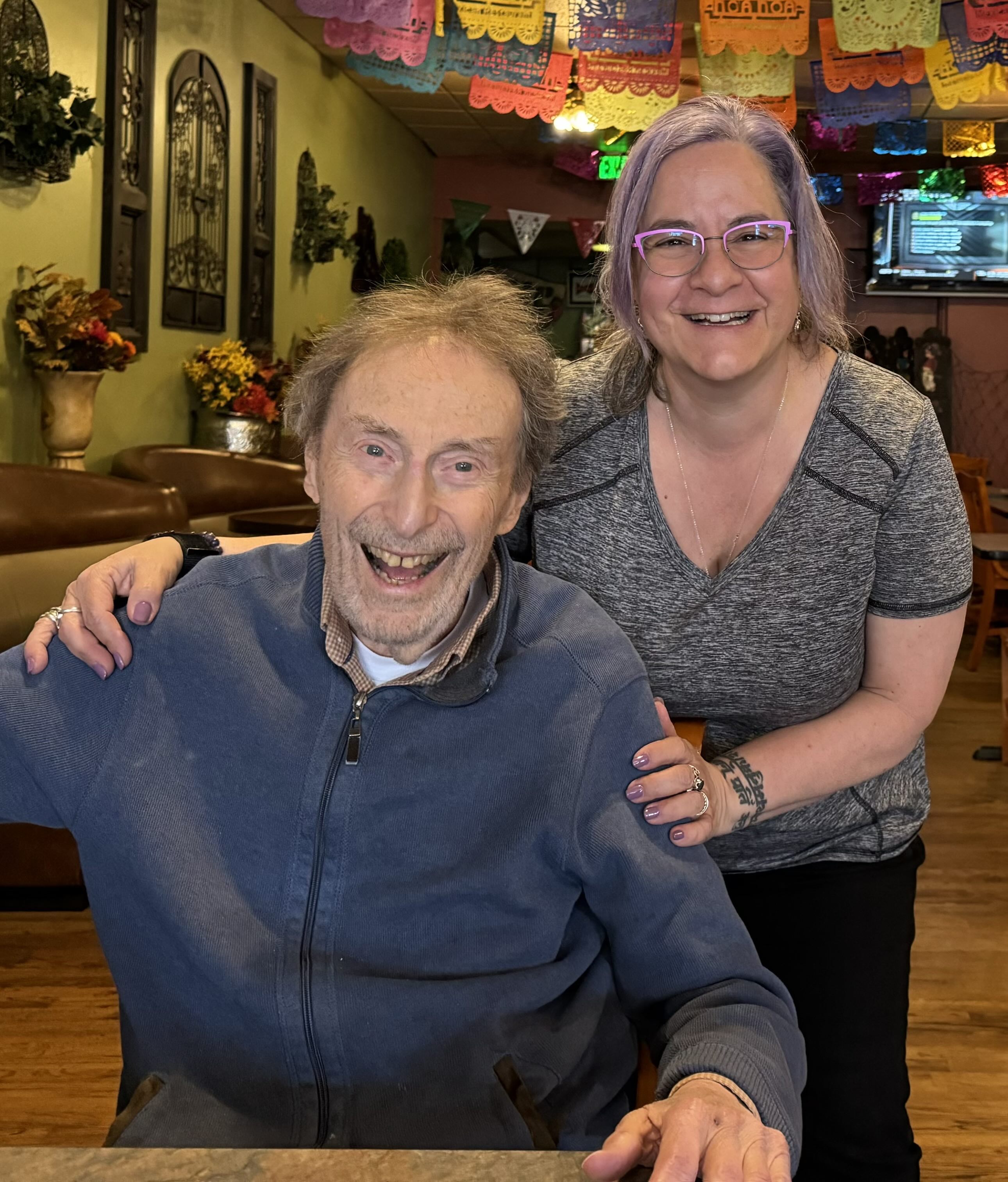
For Arnie, 1933-2025
My father remembers the first time we met Arnie Langberg better than I do. It was a high school open house in my 9th grade year, back in the days of four-year junior highs, and my father was worried about the Open School. Much as my parents wanted to buck traditional educational systems and had chosen progressive schools since I was three, the idea of an ungraded high school where competencies were built through projects and travel terrified him. Would I be able to get into college without grades? Would I be successful, whatever that meant to each of us at the time? My dad wore a shirt to the open house that said “When God created man, she was only joking,” a detail Arnie still remembered vividly 40 years later. After Arnie described the school and the program, Dad asked if he might go back to high school and do it all over again at the Open School. I’m not sure which embarrassed me more at 14—the t-shirt or the question—but Arnie never forgot that first meeting, even into his 90s, and Alzheimer’s hasn’t stolen it from my father yet, either.
I didn’t realize back then who Arnie was, how significant his contributions to alternative education had been or would become. He was just my principal, the man who became a second father when my parents’ marriage was crumbling, the man who convinced me to take calculus even though I never mastered pre-Algebra, the man who always saw something more in me than I saw in myself. When I declared myself a writer in 10th grade, it was Arnie who advised me through my Creativity passage—he was the first adult to take my aspirations seriously. It was Arnie who showed up with used books before my passage travels at the end of 11th grade; thanks to him, I read 100 Years of Solitude and The Women of Brewster Place for the first time during that trip, and I still have the battered copies I carried across the world at 17.
But what made Arnie special was that every student thought of him as a second father, a lifesaver, a buoy in the stormy years of adolescence. He could make anyone feel seen, accepted and loved, like each of us was his favorite person in the world. When Arnie passed away on October 8, 2025, shortly after his 93rd birthday, Open School Facebook groups overflowed with stories about how he’d saved lives and seen students for their strengths. Alums shared how he’d invited them for family meals at his home, how he believed in them when no one else did, how he was the only reason some had managed to graduate high school after being failed by traditional schools repeatedly.
This, perhaps, is the true magic of an educational pioneer: Arnie cared about who we were, who we wanted to be, and what mattered to us. Before we were even talking about the importance of equity and the asset lens in education, Arnie saw ours clearly and lifted every one of us. When he asked us what we thought about something, he actually wanted to hear our answers, our perspectives. And he meant it when he said he knew each of us could “create the world that ought to be” in the course of our lives, the school objective that later became the title of Arnie’s memoir.
I have particularly fond memories of an “argument” I had with Arnie repeatedly over the years. It started in college: Every time I encountered a gap in my Open School education, at least in comparison to the previous learning my peers brought into the classroom, I’d let Arnie know. Whether it was a skills gap, like having no idea how to write an academic essay or manage a multiple choice exam when I got to college, or a knowledge gap, like never studying US history, I’d point out the “failings” of Open School. Arnie always responded the same way, asking “Did you know how to navigate the gap, Jennifer?” Well yes, I always knew how to ask the right questions or develop the right skills or seek out the information I was lacking. And his reply? It was the same every time: “Well then, I win.”
Over the last two decades, I spent a lot of time with Arnie. I worked alongside him as a consultant for school design, took him out for lunch occasionally, and included his ideas in my writing. Interviewing Arnie was always a test in patience; there was no such thing as a straight answer. More often than not, he’d begin by saying “Well, to understand that we have to go back 50 years and trace how we got there.” Every story started from his history, from moments in his first years of teaching or some incredible person he’d studied or worked with. When colleagues and I interviewed him for a virtual event on his life in education, with live viewers and a one-hour time limit, I had to prep him carefully to ensure we’d have time for more than one question. And when I interviewed him for my most recent book, Taming the Turbulence in Educational Leadership, I left with three hours of audio recording.
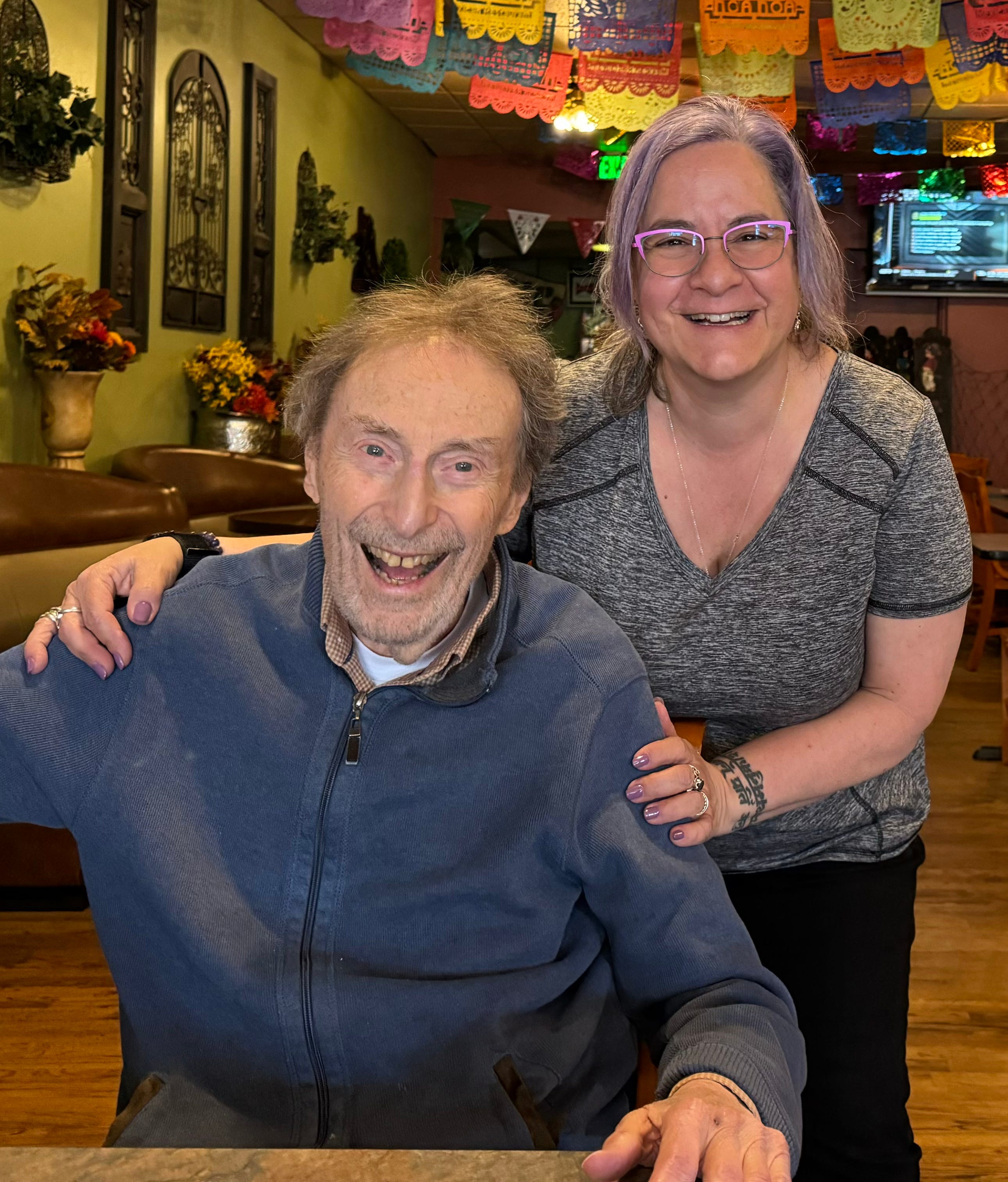
Over the years, I’ve come to understand the thinking behind the Open School’s pedagogical and instructional approaches, and Arnie contributed much more to the field of educational transformation than most Open School graduates realize. He trusted us implicitly before “learner agency” or “radical trust” were even mentioned in educational circles. He never saw himself as “giving” agency to students, either; instead, he saw the inherent power in our inherent humanity. He believed that every young person was capable of finding their own pathway and contributing in their own way, even the most “troubled” or “high risk” teenagers. These ideas are still being discussed by educational thought leaders over 50 years later—but Arnie made them happen.
Arnie took this vision to Denver’s biggest, most “unmanageable” public high schools in the latter part of his career, proving that these student-directed, experiential approaches worked with students from all socioeconomic and ethnic backgrounds. And Arnie was well ahead of the curve, standing alongside educational thought leaders like Paolo Freire, bell hooks, and so many others who saw that any and every young person, when provided the space to think for themselves, manage their own learning, and engage in praxis with real issues that mattered to them, would learn and grow not because the system required it, but because it brought them joy.
Today, October 8th, is Arnie’s yahrzeit, the first anniversary of his passing. In Judaism, there is a phrase to express mourning that I use even though I’m no longer religiously or politically Jewish: May his memory be a blessing. This doesn’t just mean that the memory itself is a blessing, but that what we make from that memory, what we carry on into our own lives, creates new ripples into the future. In this sense, the phrase should really be translated as “May his memory be for a blessing.” This is what we do as part of the Open School community, collectively and individually, every time we make a choice that is grounded in what Arnie taught us. We make his memory a blessing every time we create the world that ought to be on whatever pathways we’ve chosen. And this is why educational pioneers never die; we keep Arnie alive in how we carry his legacy forward.
Its partial or total reproduction, as well as its translation into any language, is prohibited without the written authorization of its author and PRINCIPLED Learning Strategies.
Copyright © PRINCIPLED Learning Strategies, Inc.
Find more related content, including recent and older writings